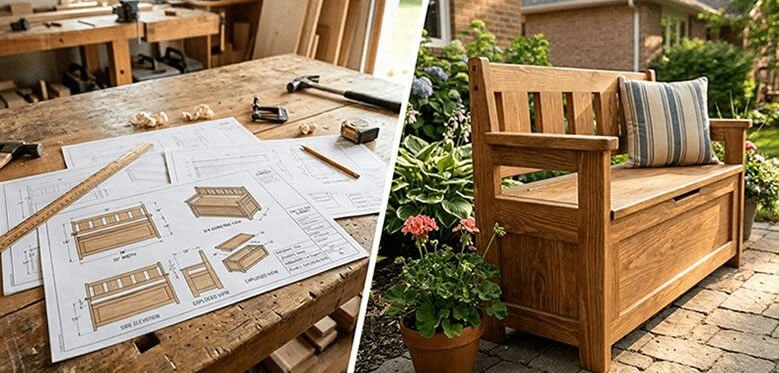
Yes, you can make money selling woodworking projects, and plenty of people do, ranging from hobbyists who cover the cost of their tools to full-time makers who run small furniture businesses. But the honest answer has more to it than a simple yes. Some woodworkers earn a steady side income, others sell a few pieces to friends and family, and many discover that the gap between "I can build this" and "I can profit from this" is wider than expected. The difference usually comes down to what you choose to build, how you price it, where you sell it, and whether you treat the work like a business rather than a pastime.
This guide walks through the whole picture. You'll learn which woodworking projects tend to sell well, how to calculate a price that actually pays you for your time, what selling on marketplaces like Etsy really costs, how to find customers locally and online, and how to avoid the mistakes that keep most beginners from ever turning a profit. Whether you're looking for a modest woodworking side hustle or the first steps toward a full woodworking business, the fundamentals are the same.
Is Selling Woodworking Projects Really Profitable?
Woodworking can be profitable, but profit is not automatic, and it rarely comes from the place beginners expect. Handmade wood items appeal to buyers because they are durable, personal and often more attractive than mass-produced alternatives. A solid oak serving tray or a handmade walnut cutting board carries a story and a quality that a factory product usually can't match, and many customers are willing to pay more for that. That demand is the foundation of the whole opportunity.
The challenge is on the supply side. Woodworking is time-intensive, materials cost real money, and the market for handmade goods is crowded. If you sell something for $40 that took you four hours to make and cost $15 in lumber and finish, you have earned about $6 an hour before fees, which is not much of a business. The woodworkers who do well tend to focus on projects with a strong ratio of selling price to time and materials, they build efficiently through repeatable designs, and they price with confidence rather than apologizing for their rates.
It also helps to be realistic about the timeline. Most people do not earn meaningful money from their first few projects. Early builds are usually slower, less polished and more wasteful than later ones. Expect a learning period during which you are mostly improving quality, speed and your understanding of the market. Income tends to grow as your skills, reputation and product line develop, so think of the first months as an investment.
Woodworking Projects That Sell: What Buyers Actually Want
The best-selling woodworking projects share a few traits. They are useful or decorative in everyday life, they are quick enough to build in batches, they use modest amounts of material, and they are easy to photograph and ship or hand to a local buyer. It is far easier to make money on items that fit these criteria than on large, one-off furniture commissions, at least at the start.
Cutting boards and serving boards are among the most consistent sellers in handmade woodworking. They are practical, giftable and easy to customize with engraving or unique wood combinations. Because the design is simple and the process repeatable, you can produce several boards from one glue-up session. Hardwoods like maple, walnut and cherry are the usual choices, and a food-safe finish such as mineral oil is standard. Charcuterie boards and cheese boards sit in the same category and often command slightly higher prices.
Small furniture and home organization pieces also sell well. Floating shelves, side tables, plant stands, entryway benches, key holders and wall-mounted organizers all meet real household needs. These pieces sit in the middle of the effort-to-price spectrum, so they can deliver stronger revenue per item than small crafts, though they take longer to build and are more expensive to ship.
Outdoor and garden projects are another dependable category, especially in spring and summer. Cedar planter boxes, raised garden beds, birdhouses, bird feeders, benches and simple outdoor tables appeal to homeowners who want a durable, attractive alternative to store-bought options. Because outdoor items are bulkier, they often sell best locally, where you can avoid shipping costs.
Personalized and seasonal items are where many makers find their edge. Custom name signs, engraved gifts, wedding décor, holiday ornaments and personalized keepsake boxes let you charge a premium for the personal touch. Seasonal timing matters here. Holiday décor sells heavily in the fall, wedding items peak in warmer months, and gift-oriented products spike before Christmas, Mother's Day and Father's Day.
Kids' and family items round out the list. Wooden toys, step stools, small tables and play-themed pieces attract parents and gift buyers, though anything made for children should be built and finished with safety in mind, using non-toxic finishes and avoiding small parts that pose a choking hazard.
A useful way to choose your first products is to ask three questions. Can I build this reliably in under a few hours? Can I make more than one at a time? Do I know someone who would pay for it? If the answer to all three is yes, you likely have a good candidate.
How Much Money Can You Realistically Make?
Income from woodworking varies widely, and anyone who promises a specific figure without knowing your skills, location and hours is guessing. It is more helpful to look at the mechanics of how income is built.
Your earnings depend on four levers: the selling price of each item, the number of items you can produce and sell, your cost per item, and the time you spend. A maker who sells a handful of items a month at modest prices will earn pocket money, while one who builds a repeatable product line, sells consistently and manages costs can build something more substantial. Custom furniture makers who take commissions can earn considerably more per piece, but they also spend more time per project and depend on a steady flow of clients.
As a purely illustrative example, imagine you sell a cutting board for $55. Suppose the wood, glue and finish cost about $12 and the board takes roughly three hours to make from start to finish. After materials, you have about $43 left, which works out to a little over $14 an hour before marketplace fees, tool wear and other overhead. If you can batch several boards at once and cut your time per board to two hours, that hourly figure rises noticeably. This is why efficiency and repeatable designs matter so much: the same product can be barely worth your while or genuinely rewarding, depending on how you build it.
The takeaway is that woodworking income is a function of pricing and productivity, not just talent. Improving either one improves your results.
How to Price Woodworking Projects So You Actually Profit
Underpricing is the single most common mistake among new woodworkers. Many people price by comparing themselves to the cheapest listing they can find, or they charge only for materials and forget that their time has value. The result is plenty of sales and very little profit.
A simple pricing approach is to add up your materials, your labor, a share of your overhead, your selling fees and a profit margin. Materials include lumber, hardware, glue, sandpaper, finish and packaging. Labor is the number of hours you spend multiplied by the hourly rate you want to earn, and that hourly rate should reflect your skill and local market rather than minimum wage. Overhead covers the costs that are easy to forget, such as electricity, blade replacements, shop space, tool maintenance and photography. Fees include marketplace charges and payment processing, which we will cover in detail below. Finally, a profit margin gives your business room to grow, replace tools and absorb slow months.
Once you have a number from your calculation, compare it against the market. Look at what similar handmade items sell for, paying attention to quality, materials and presentation rather than just the price tag. If your calculated price is far higher than what comparable makers charge, you may need to either speed up your process, choose less expensive materials or differentiate your product through design and personalization. If your price is lower than the market, you probably have room to raise it.
It is also worth remembering that handmade buyers are often not shopping on price alone. They value craftsmanship, uniqueness and the ability to buy something that isn't mass-produced. Clear, well-lit photos, good descriptions and professional packaging all support a higher price. Many makers find that when they raise their prices modestly, they lose only the most price-sensitive customers and actually gain buyers who see the higher price as a sign of quality.
Where to Sell Your Woodworking Projects
You have more places to sell than you might think, and most successful makers use a mix of channels rather than depending on just one.
Selling Woodworking Online on Etsy
Etsy is the best-known marketplace for handmade goods and a natural first stop, because it already has buyers searching for exactly the kind of items you make. The tradeoff is that it charges fees, and those fees affect your pricing. According to current 2026 sources, a typical US sale on Etsy carries a $0.20 listing fee, a 6.5% transaction fee applied to the full order total including shipping, and payment processing of 3% plus $0.25. Together, that comes to roughly 10% of a sale plus small fixed amounts. There is also an optional Offsite Ads program, which charges 15% on sales attributed to those ads for shops earning under $10,000 a year, dropping to 12% and becoming mandatory once a shop passes that threshold, with a cap of $100 per order.
To see how this plays out, consider a $60 item with $10 shipping, for a $70 order. The 6.5% transaction fee is about $4.55, payment processing is about $2.35, and the listing fee is $0.20, so Etsy's fees total roughly $7.10, or a little over 10% of the order. That is manageable, but it means you should build fees into your prices from the start rather than discovering them after you have already set your rates. Etsy also offers a mechanism that refunds part of the transaction fee on sales you drive yourself through your own promotion, which is worth knowing if you build an audience on social media.
Etsy works best for discovery. Buyers can find you through search even if they have never heard of you, which is valuable when you are just starting out. Over time, many sellers use it as one channel among several, building their own audience elsewhere so they are less dependent on a single platform's rules and fees.
Local Markets, Craft Fairs and Word of Mouth
Local selling is often the most profitable route for beginners, and it avoids online fees and shipping headaches entirely. Farmers' markets, craft fairs, holiday bazaars and pop-up shops let buyers see, touch and smell your work, which is a strong advantage for a handmade product. Table fees and travel add costs, so it is worth starting with smaller events, tracking your sales at each, and focusing on the ones that deliver.
Word of mouth is also underrated. Friends, neighbors, coworkers and community groups can become your first customers, and their referrals often lead to larger custom jobs. Local Facebook groups, neighborhood apps and community boards can also help you connect with people who want handmade furniture or gifts. Be sure to check any local licensing, sales tax and permit requirements that apply to your area, since these vary by location.
Social Media, Your Own Website and Custom Commissions
Instagram, Pinterest, TikTok and YouTube are powerful tools for woodworkers because the craft is so visual. Short videos of a build, a finishing reveal or a before-and-after can attract followers who later become customers. Social media also helps you build a personal brand, which supports higher prices and repeat business.
A simple website or online store of your own gives you complete control over pricing, branding and customer relationships, without marketplace fees other than payment processing. Many makers use Etsy or social media to attract buyers and then move repeat customers to their own shop.
Custom commissions can be highly rewarding. A customer who wants a specific dining table, built-in shelf or piece of furniture will often pay considerably more than they would for a ready-made item, and commissions are typically paid in part up front, which reduces your risk. The tradeoff is that commissions demand more communication, more time per project and more skill, so they are often a step to take once you are confident in your abilities.
What You Need to Get Started Selling Woodworking
You do not need a massive workshop to begin. Many successful makers start with a modest tool set in a garage, basement or shed. The core kit usually includes a tape measure and combination square, a saw such as a circular saw or miter saw, a drill and driver, clamps, a sander, wood glue and basic safety equipment. A router, a pocket-hole jig and a planer or jointer can be added later as your product line and budget expand.
Beyond tools, a few business basics will save you trouble down the road. Keep track of your income and expenses from day one, since accurate records make pricing decisions easier and tax time far less stressful. Consider whether your local rules require a business license, and check how sales tax applies to your sales. It is also wise to look into liability insurance, particularly if you sell items like children's furniture, outdoor structures or anything that bears weight, because a product that fails can lead to injuries and claims. Rules differ by location, so it is worth confirming the details with a local small business office or a qualified accountant.
Safety deserves attention as well. Production work means more hours with power tools, more dust and more repetition, so protective habits such as eye and ear protection, dust control and proper machine setup matter even more when woodworking becomes a regular income source.
Finding Good Plans and Designs for Products You Can Sell
A recurring question among new makers is where to find reliable designs for items worth selling. You could design everything yourself, and many experienced makers eventually do, but starting with proven plans shortens the learning curve and reduces costly mistakes. A good plan includes a cut list, a materials list, dimensioned drawings and clear assembly steps, which lets you estimate costs and build times accurately, and that information feeds straight into your pricing.
There are several ways to source plans. Free plans from blogs and video channels are a good starting point, though quality and completeness vary. Individual paid plans offer more polish but can add up if you want a wide range of products. Large plan collections give you a broad library in one place, which suits makers who want to test different product ideas quickly.
One example of a large collection is Ted's Woodworking, which advertises more than 16,000 plans covering furniture, outdoor projects, storage, décor and smaller crafts, delivered in PDF and DWG formats. Some reviews also list a guide on starting a woodworking business among the included bonuses. A big library can be useful when you want to try many different products and see which ones sell, but there are two cautions. First, plan quality can vary across a catalog that size, so review the cut list and diagrams before you buy lumber. Second, and more importantly for sellers, check the licensing terms before selling items built from any commercial plan, since permissions differ between products and can change. Whatever source you use, the smartest long-term strategy is to modify plans, refine dimensions and develop signature designs of your own so your products stand out.
Tips to Make Your Woodworking Products More Profitable
Once you have a few products and a place to sell them, small improvements in how you work can have a large impact on profit.
Build in batches. Cutting all the parts for several identical items at once, then gluing, sanding and finishing them together, cuts the time per piece dramatically. Setting up a stop block, a jig or a template once and reusing it for a full batch is one of the easiest ways to raise your effective hourly rate.
Buy lumber smartly. Materials are one of your biggest costs. Purchasing in larger quantities, building relationships with local lumber yards, using offcuts for small items and choosing cost-effective species for products that don't need premium wood can all improve margins. Reclaimed and salvaged lumber can also make a distinctive, appealing product, provided you check it carefully for hidden hardware and moisture.
Invest in presentation. Buyers judge handmade items by their photos and packaging before they ever touch the product. Natural light, a clean background and several angles make a big difference, as does simple, attractive packaging such as a branded tag or a small care card. These details cost little and justify higher prices.
Offer personalization. Engraving, custom sizes and name additions let you charge a premium for a product you already know how to make. Personalization also tends to reduce direct price comparison, since a customer can't find the exact same item elsewhere.
Focus on a niche. A maker known for a specific style, such as rustic farmhouse pieces, modern minimalist décor, kids' furniture or outdoor garden products, is easier to remember and recommend than a generalist. A niche also makes your marketing simpler and helps you build a loyal audience.
Track what sells. Pay attention to which products bring in the most revenue per hour, not just which ones sell most often. A slow, complicated item that sells rarely may be less valuable than a quick, popular one, and your numbers will tell you where to focus.
Common Mistakes That Keep Woodworkers From Making Money
Many woodworkers who struggle to earn money fall into the same handful of traps. The first is underpricing, which we have covered, along with forgetting to include fees and overhead in the price. The second is building products that are too complex or time-consuming for their selling price, such as intricate pieces that take days to make but sell for a small amount. The third is spreading effort across too many product types, which prevents you from getting fast and efficient at any of them.
Another frequent mistake is ignoring marketing. Great craftsmanship does not sell itself, and a beautiful piece that nobody sees earns nothing. Taking the time to photograph your work well, write clear descriptions with the right search keywords, and share your progress on social media is as important as the building itself.
Some makers also neglect quality control. Selling a product with a rough finish, a wobbly joint or a cracked panel can lead to returns, negative reviews and lost trust, which are much harder to recover from than the time it takes to inspect each piece. Finally, many new sellers overlook the practical side of business, such as tracking expenses, understanding tax obligations and shipping items safely. Heavy, fragile wooden goods can be expensive to ship, so it is worth calculating packaging and postage before you list an item, or focusing on local pickup for bulkier products.
A Simple Roadmap to Start Selling Woodworking Projects
If you are ready to begin, a straightforward path looks like this. Start by choosing two or three products that are quick to build and in demand, such as cutting boards, planters or floating shelves, and build a small batch of each to refine your process. Calculate your costs and set prices that cover materials, time, fees and profit. Photograph your finished products well, and start selling to your immediate circle and local community to gather feedback and early reviews. Then open an online shop or attend a local market to reach new buyers, tracking which products and channels perform best. As you learn what works, expand your product line, raise your prices where the market allows, and gradually invest in better tools and more efficient processes.
Progress in this business tends to be steady rather than sudden. Each product you refine, each customer you satisfy and each improvement in your workflow adds up over time.
Frequently Asked Questions About Selling Woodworking Projects
Can you really make money selling woodworking projects? Yes, many people do, ranging from small side incomes to full-time businesses. Results depend on what you build, how you price it, where you sell and how efficiently you work. Most beginners should expect a learning period before earning meaningful income.
What woodworking projects sell best? Cutting boards, serving boards, floating shelves, planter boxes, birdhouses, small tables, plant stands, personalized signs and seasonal décor are consistently popular. Items that are useful, giftable, quick to make and easy to ship or deliver locally tend to perform best.
How much should I charge for my woodworking projects? A reliable approach is to add materials, labor at your target hourly rate, a share of overhead, marketplace fees and a profit margin, then compare the result with similar handmade products. Avoid pricing based only on the cheapest competitor, and remember that buyers of handmade goods often pay more for quality and personalization.
What are the fees for selling on Etsy? In the US, a typical sale involves a $0.20 listing fee, a 6.5% transaction fee on the order total including shipping, and payment processing of 3% plus $0.25. Offsite Ads are optional for smaller shops and cost 12% to 15% on attributed sales. Fees change over time, so confirm current rates on Etsy's official fees page before setting your prices.
Do I need a business license to sell woodworking? Requirements vary by country, state and city. Many places require a business license or sales tax registration once you sell regularly, so check with your local authorities or an accountant.
Do I need a big workshop to start? No. Many successful makers start in a garage, basement or small shed with a basic tool kit. You can add equipment gradually as your income and product line grow.
Can I sell items I build from purchased woodworking plans? It depends on the license attached to each plan or collection. Some allow selling finished items and others restrict it, so read the terms before selling. Creating your own designs or modifying plans significantly can also help you stand out.
Is woodworking a good side hustle? It can be, especially for people who already enjoy the craft and can work efficiently. It requires an upfront investment in tools and materials, and it is more time-intensive than some other side businesses, but it offers creative satisfaction and the potential to grow into something larger.
How do I ship heavy wooden items? Use sturdy packaging, protect corners and surfaces, and compare carrier rates before you set your price. For bulky pieces like furniture, local pickup or delivery is often more practical and profitable than nationwide shipping.
How long does it take to start making a profit? There is no fixed timeline. Some makers see their first profitable sales within weeks, while others spend several months refining their products, pricing and marketing. Tracking your numbers from the beginning helps you get there faster.
Final Thoughts: Turning Sawdust Into Income
So, can you make money selling woodworking projects? Absolutely, but the makers who succeed are the ones who approach the craft with both creativity and a business mindset. They choose products that balance demand with efficient production, they price to cover their time and costs, they present their work professionally, and they keep improving their skills and processes.
You do not need to quit your job or invest in an enormous workshop to begin. Start small, build a few products you can make well, sell to the people around you, and let the results guide your next steps. Each project teaches you something about your craft and your customers, and over time those lessons compound into a business that can grow as large as you want it to.
If you are still building your skills and product ideas, a well-organized library of woodworking plans can help you test new designs and find the projects that suit your tools, your space and your market. Pick your first product, run the numbers, and make that first sale.
Ready to build projects that sell? Explore the full collection of step-by-step woodworking plans and pick your first profitable project today.

Drag & Drop Website Builder